Research & analysis
This page showcases my thought leadership for IEEFA, CSIRO, academic conferences and journals, and not‑for‑profits, separate from my consulting advisory work.
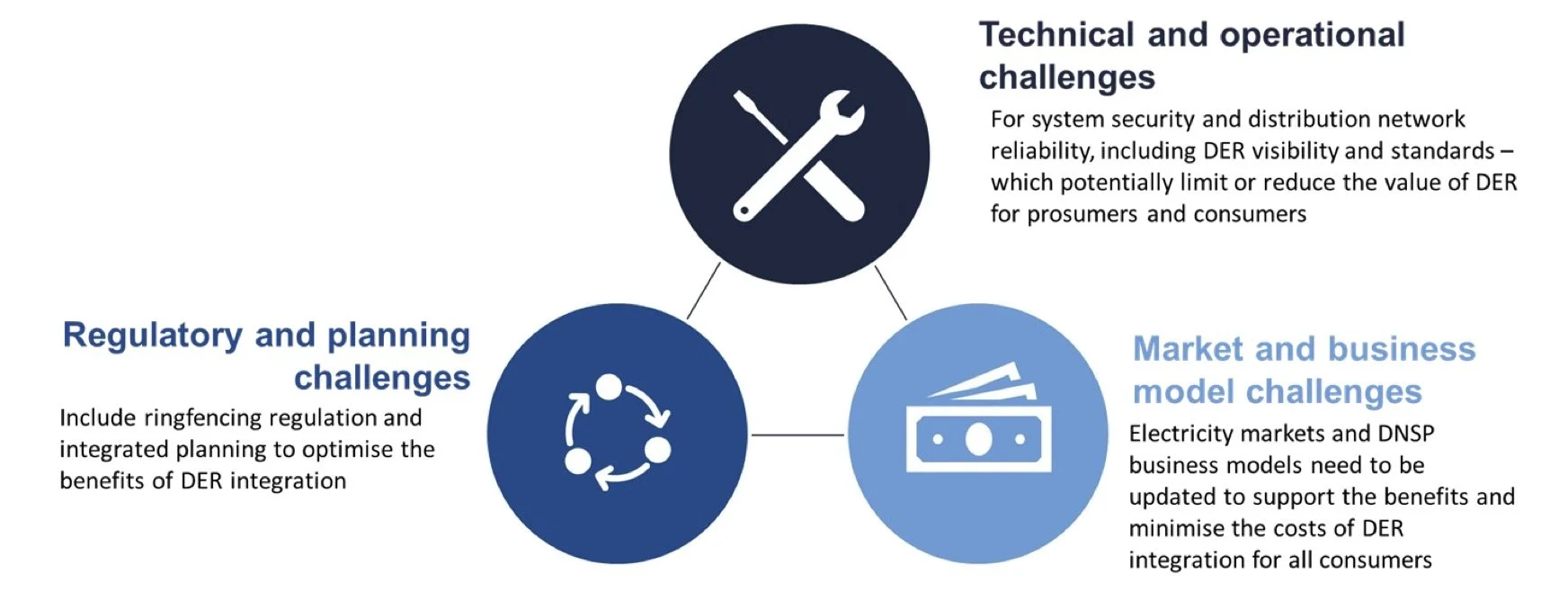
1. Cheaper, faster decarbonisation with DER
-
Fact Sheet: Distributed Energy Resources (DER)
IEEFA, February 2024
This fact sheet defines DER, highlights Australia’s world-leading DER uptake, the system benefits of coordinated DER integration, and the urgent need for standards, technical interoperability, data access and consumer-centred policies to fully realise DER’s value for reliability, decarbonisation and household cost reduction
-
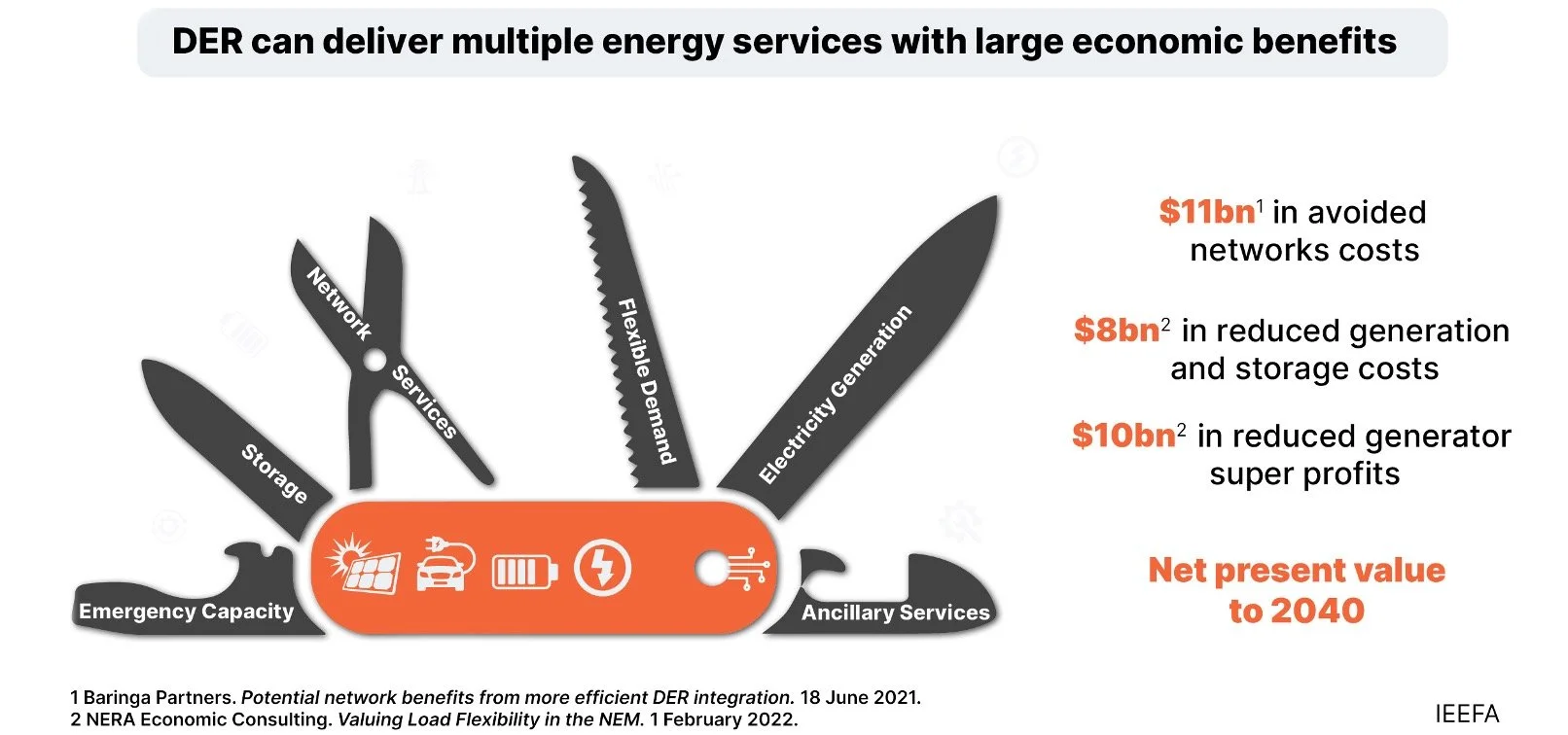
DER could provide $19 billion economic boost by 2040
IEEFA, February 2024
Overview, PDF and ERICA conference slides
This meta-analysis of nine studies finds that distributed energy resources (DER) such as rooftop solar, batteries and flexible demand could deliver at least $19 billion in net economic benefits for Australia by 2040, plus an additional $10 billion in reduced generator super-profits, if swiftly and effectively integrated. As far as I know, it is the only meta-analysis of DER benefits published globally.
-
Saturation DER modelling shows distributed energy and storage could lower costs for all consumers if we get the regulation right
IEEFA/ITP Renewables, 2024:
Article, Media release, RenewEconomy article, Conference keynote, In Japanese
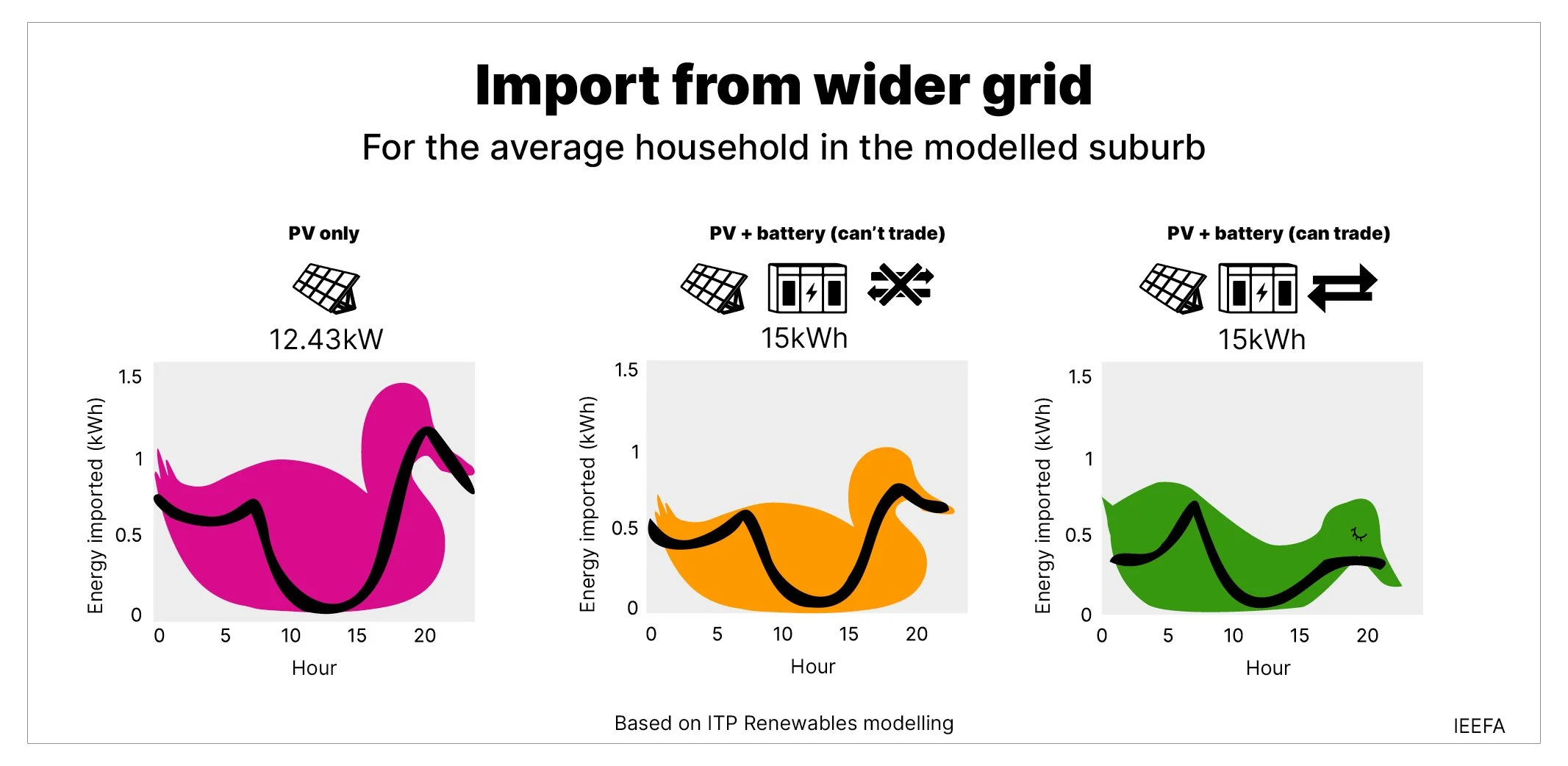
This was ground-breaking backcasting modelling of saturation levels of DER which I initiated and the smart people at ITP Renewables undertook. It demonstrated that Australia-wide saturation of rooftop solar, batteries and flexible demand could put the ‘duck curve’ to sleep.
For this to happen, economic regulation of distribution networks must be reformed, policies and programs need to support shifting loads like hot water and EV charging to the middle of the day, and AEMO's next Integrated System Plan (ISP) should revise DER uptake forecasts and enable truly integrated planning with distribution networks.
-
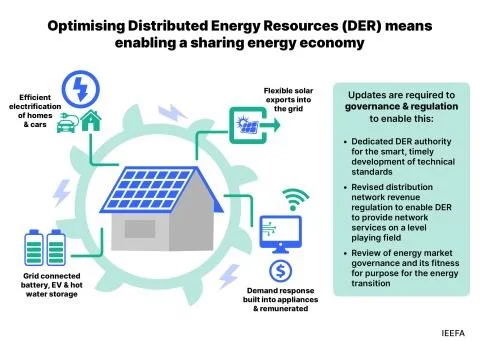
Growing the sharing energy economy: How Energy Ministers can support cheaper, faster decarbonisation through distributed energy resources
IEEFA, October 2023
Overview, Slides, PDFThis is a policy overview of all major reforms that Federal, state and territory energy ministers should undertake to accelerate the uptake and integration of DER. The reforms outlined include immediately establish a national DER technical authority, reforming network regulation, improving energy market governance, unlocking flexible demand and fast-tracking distributed storage.
-
The Future of Electricity Distribution Networks
Churchill Fellowship Report, 2019
This was the report that started it all! I undertook a Churchill Fellowship research across North America and Europe and concluded that progress in building clean, smart, customer-centric networks depends on clear strategic vision and government leadership. It’s thorough record of my fellowship insights and a good read, I promise.
-
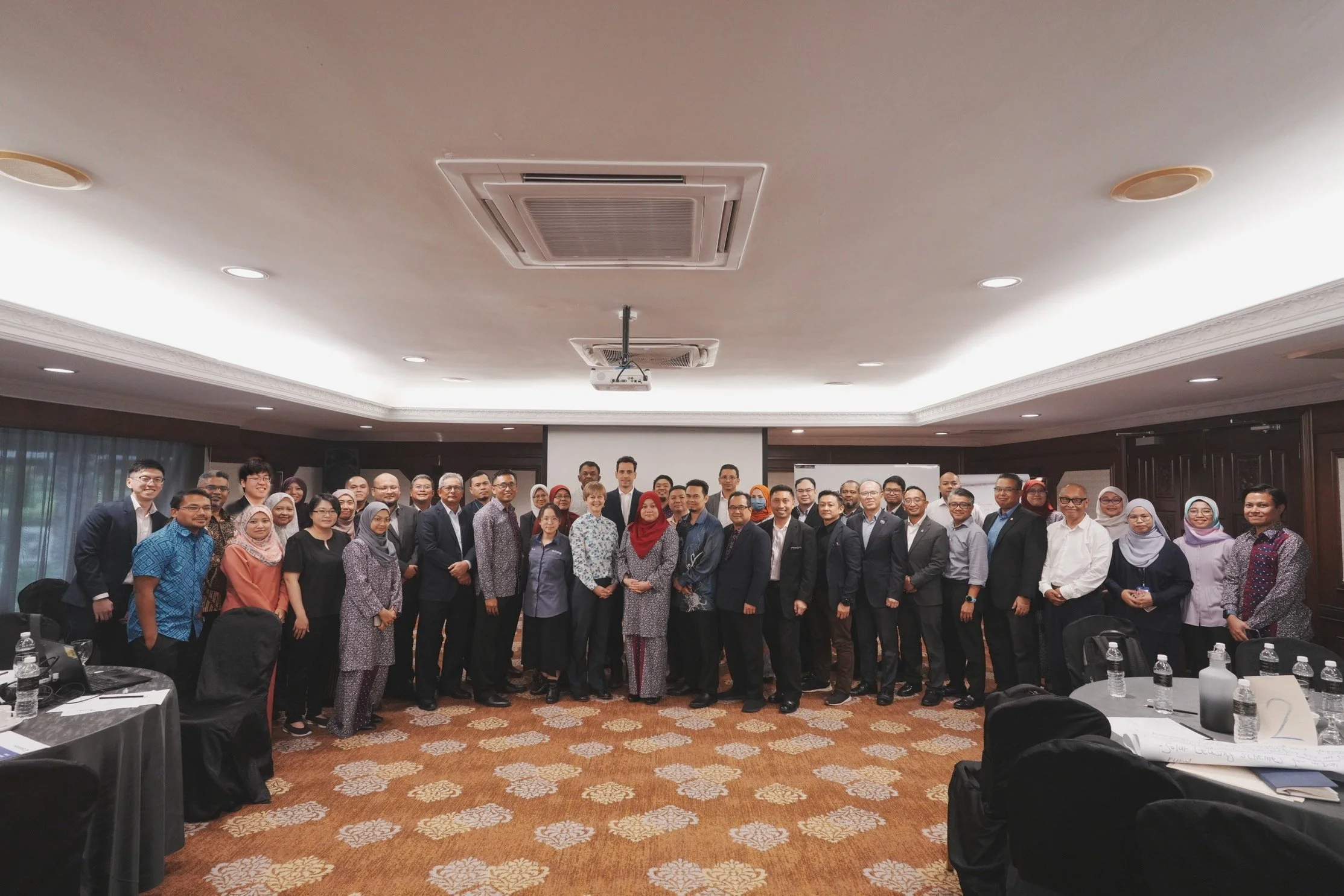
Learning from Peninsular Malaysia on DER Integration
ERICA conference, 2025
Abstract, PDF, Extended abstractAustralia is not the only country in the world making progress on DER integration. This conference presentation drew on my experience leading the development of a DER Roadmap for Peninsular Malaysia. It is a selection of insights around market asset registers, regulatory agility, local planning, and electrified two-wheelers, among others.
-
Lessons from Australia for India on integrating distributed energy resources
IEEFA, 2023
Overview and PDF download, Podcast
In my first report for IEEFA, I drew on Australia’s DER integration experience to outline a technical, regulatory and financial blueprint for accelerating grid transformation in India. It provides lessons from Australia’s successes and mistakes which are relevant to any countries wanting to accelerate DER integration.
-
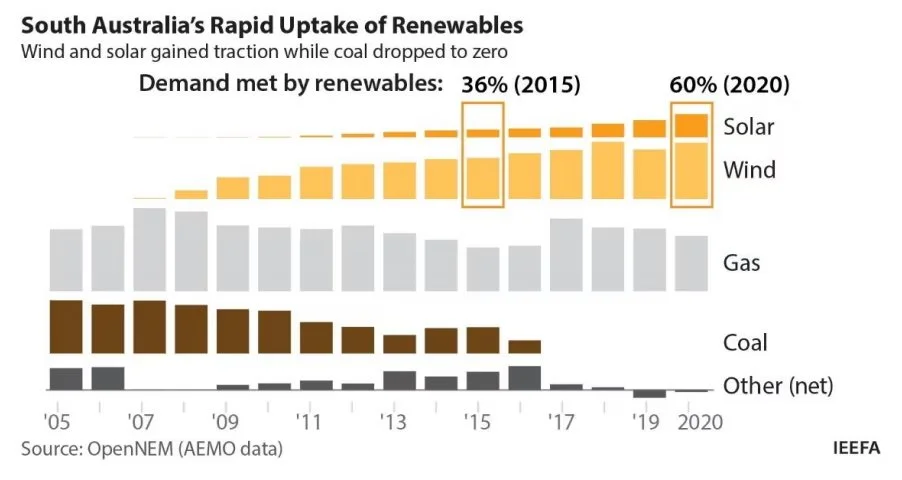
A grid dominated by wind and solar is possible
With Johanna Bowyer for IEEFA, 2023
Overview, PDF, Media release, WEF article
Why read this: We discuss how South Australia went from 0-60% renewables in 14 years and identify seven key lessons for integrating variable renewable energy (VRE) and distributed energy resources (DER) at high penetration: enable market and system reforms, invest in digital network visibility and flexibility, maintain up-to-date technical standards, accelerate deployment of storage and demand response, manage minimum demand with operational innovation, support proactive government leadership, and promote ongoing international learning.
-
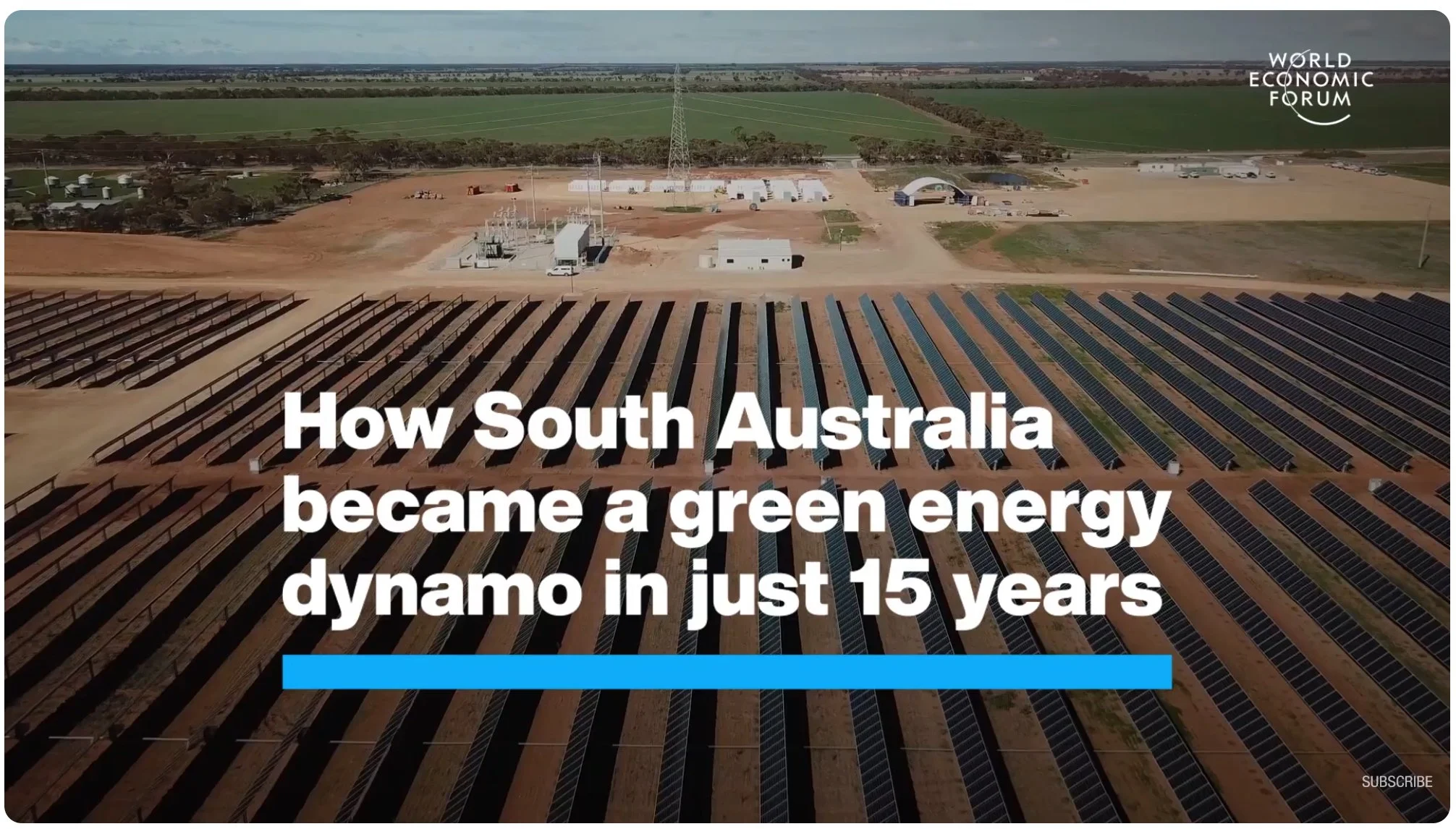
South Australia - World Economic Forum video
2. DER technical integration
-
The revolution will be in distribution: Faster, cheaper decarbonisation through integrating Distributed Energy Resources (DER)
Engineers Australia, 2025
This is an overview of engineering priorities for integrating DER into distribution networks. It includes discussion of real-time network visibility and data flows, harmonised inverter and DER standards, smart inverter deployment and voltage management, dynamic operating envelopes for flexible exports, distributed automation and controls, and cross-sector collaboration to accelerate technical and workforce innovation.
-
Submission to DCCEEW: Draft Prototype National Technical Regulatory Framework for Consumer Energy Resources
Personal submission, September 2025
This submission calls for urgent legislative and regulatory action to establish a well-funded national CER/DER technical regulator, with clear governance, broad device scope, and strong compliance powers, to unlock billions in consumer and system value by 2040. It is the latest in my six years of work on the governance of DER technical standards in Australia.
-
How rapid implementation of flexible exports could maximise rooftop solar
IEEFA, December 2024:
Overview, Media release, PDF, RenewEconomy articleThis short report outlines the status of the implementation of flexible exports across Australia and calls for rapid, nationally consistent adoption of flexible exports to almost double rooftop solar exports, cut grid costs and deliver hundreds of millions in consumer benefits. Currently delays and inconsistent approaches are causing significant losses.
For this to happen, economic regulation of distribution networks must be reformed, policies and programs need to support shifting loads like hot water and EV charging to the middle of the day, and AEMO's next Integrated System Plan (ISP) should revise DER uptake forecasts and enable truly integrated planning with distribution networks.
-
How to make a solar ‘backstop’ work for consumers
IEEFA, 2023
ArticleThis is one of several pieces I have written over the years about AEMO's proposal for an ‘emergency backstop mechanism’ to curtail rooftop solar during minimum system load events. This article argues it must be paired with the rapid, national rollout of flexible exports (dynamic operating envelopes) to optimise benefits for solar households. It calls for a transparent rule change review, notes the risks of behind-the-meter interventions without robust governance, and highlights that well-designed flexible export arrangements and consumer safeguards are critical for balancing system security and solar investment returns.
-
Optimising the value of distributed energy resources.
Blackhall, L., Kuiper, G., Nicholls, L., & Scott, P. (2020)
The Electricity Journal, 33, 106838
This academic paper came out of an Energy Security Board ‘Future Electricity Markets Summit’ in 2019. With academic colleagues, it explores the technical, economic, and social opportunities and challenges associated with optimising the integration of DER into electricity networks and markets. It highlights ‘no regrets’ activities needed for the energy sector to unlock the full value of DER for all system users.
3. DER regulatory integration
-
Reforming the economic regulation of Australian electricity distribution networks
IEEFA, May 2024
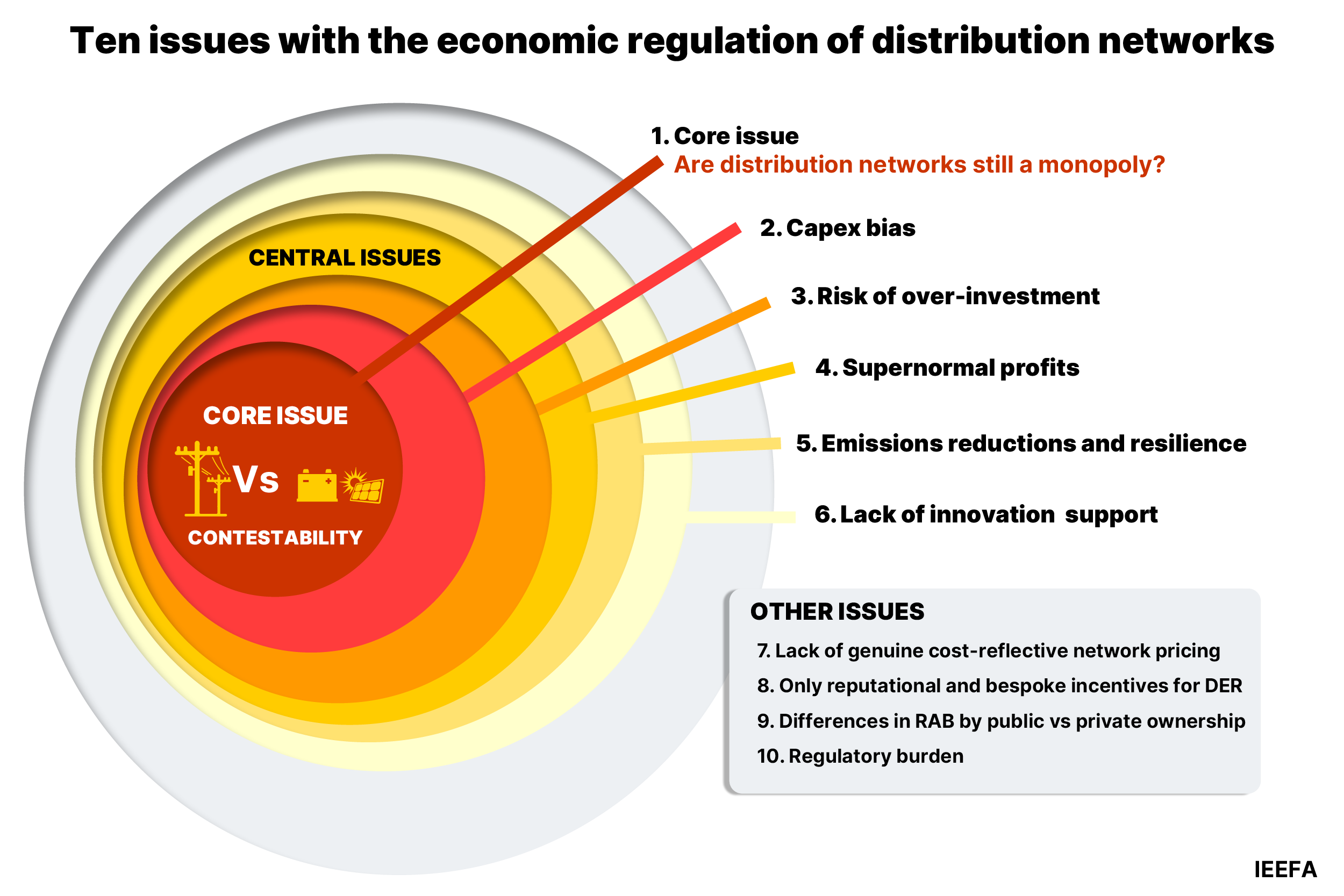
This is one of the most extensive reports I’ve written for IEEFA and contains a thorough review of how Australia’s current economic regulation of electricity distribution networks has not delivered efficient costs, despite its major influence on bills and productivity. The regulation still assumes networks are monopoly providers, even though DER can increasingly deliver network services. IEEFA recommends a Productivity Commission review to redesign regulation for a high-DER future, drawing on international reforms that introduce competition, payments to DER for network services and decarbonisation incentives.
Note: I have expanded on this analysis in work for the Energy Efficiency Council in 2025 PDF
-
'Modesty rules' – door opens to split household energy bills but not retail competition for households or small business
RenewEconomy for Integrate to Zero, March 2024
Multiple trading relationships allow households and businesses to contract with flexible demand aggregators separate to their retailer. The Australian Energy Market Commission's draft rule change allows households’ flexible resources—like solar PV, batteries and EVs—to be metered and tariffed separately from passive loads, enabling a single retailer to offer distinct tariffs for different large appliances or flexible loads without installing multiple meters. However, the reforms stop well short of true competition: customers still cannot contract with different retailers for individual flexible devices, meaning most DER value streams remain locked behind incumbents’ retail models, and consumers are denied the UK-style right to choose separate providers for rooftop solar, EVs, and other devices. This commentary is still valid given the AEMC’s final rule was consistent with its draft rule.
4. DER market integration
-
What Is the State of Virtual Power Plants in Australia? From Thin Margins to a Future of VPP-tailers
IEEFA, March 2022
Overview, Media release, PDF, Slides
This report was the first survey of VPPs in Australia. It found that although VPPs are growing in prominence, their current household market share and revenue streams remain limited, with about 300MW of aggregated DER and major retail participation still nascent. It analyses the economics and evolving business models for residential and C&I VPPs, highlights margins for operators and consumers, and argues that as markets and technology scale, VPPs will become an essential and profitable part of Australia’s future zero-carbon energy system. I would love to update this analysis if anyone’s interested.
-
Virtual Power Plants are Leveraging Australian Consumer Investment in Rooftop Solar
IEEFA for CIGRE, June 2022
This short article for CIGRE shows how Australian virtual power plants are already harnessing household solar to support the grid, lower costs and cut emissions. It’s a concise, accessible snapshot of how consumer energy investments are being turned into flexible, dispatchable capacity – and what that means for future electricity markets.
5. Flexible demand and smart appliances
-
-

Australia needs more efficient, smarter home hot water systems
IEEFA, February 2024
Overview, Briefing Note, Article, Media release
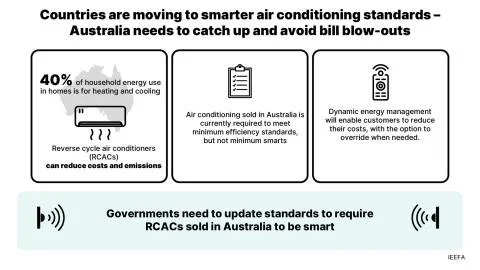
This briefing note makes the case for urgent updates to appliance standards and subsidy design to mandate efficient, flexible “smart” electric hot water systems (HWS) for all new installations across Australia. By shifting water heating away from overnight coal-fired “ripple control” to dynamic, daytime use aligned with abundant rooftop solar, the report finds this is the most cost-effective mass market solution to support electrification, reduce household energy bills (e.g., replacing gas with heat pump HWS could save $1,200/year in Victoria), and reduce system peaks and emissions.
-
Can hot water help us get out of hot water?
Integrate to Zero, Guest Blog, 2024
This article explains how household hot water systems—Australia’s original distributed energy resource—remain a vast potential resource for energy system flexibility and decarbonisation. UTS research suggests highly flexible electrified hot water could save up to $6.7 billion a year and unlock 22 GW of flexible demand by 2040. Implementation considerations include minimum efficiency standards, deployment of smart controls, alignment with abundant solar generation, and ensuring equitable access and compliance for all households.
-
Submission to AEMO on DSP Forecasting Technology
With Johanna Bowyer and Amandine Denis-Ryan for IEEFA, 2023
Overview, SubmissionIEEFA’s submission to AEMO’s consultation on demand side participation (DSP) forecasting methodology and information guidelines urges improvements to the modelling and integration of consumer flexible demand into national forecasts. Recommendations focus on transparent assumptions, accounting for new flexible technologies and DER, better capturing real-world consumer behaviour, and emphasising the value of open data and iterative stakeholder engagement to inform robust energy planning and system reliability.
-
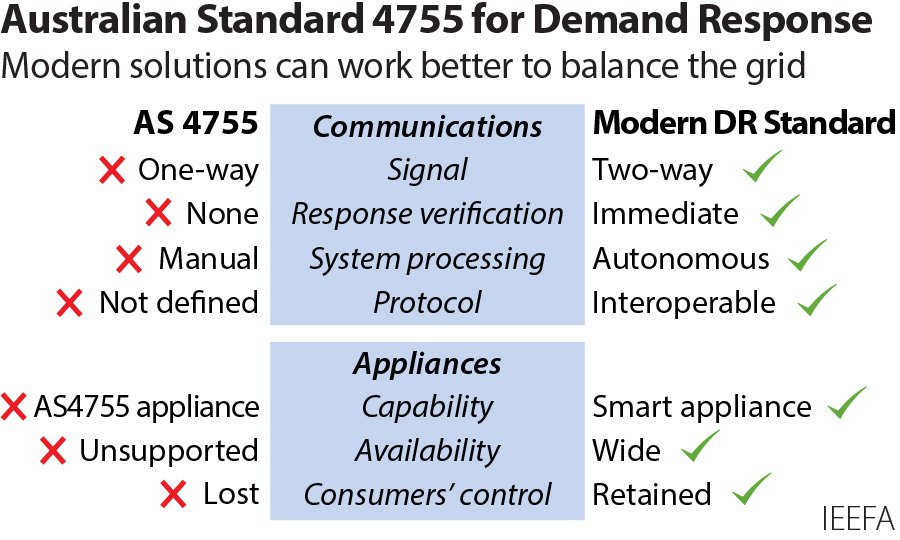
Mandating AS4755 Ignores Households and Widely Supported International Solutions
with Martin Gill for IEEFA, 2021
Overview, PDF, Commentary, Media release
If you’re interested in flexible demand regulation, this IEEFA report highlights major flaws with Australia’s unique mandate for the AS4755 appliance demand response standard, arguing it is outdated, lacks interoperability, excludes consumer override, and misses benefits of modern, international solutions. The analysis calls for Energy Ministers to rethink the approach in favour of open, consumer-centric and globally-aligned standards, to better support demand response and household engagement in the clean energy transition. This is still a live issue in Australia.
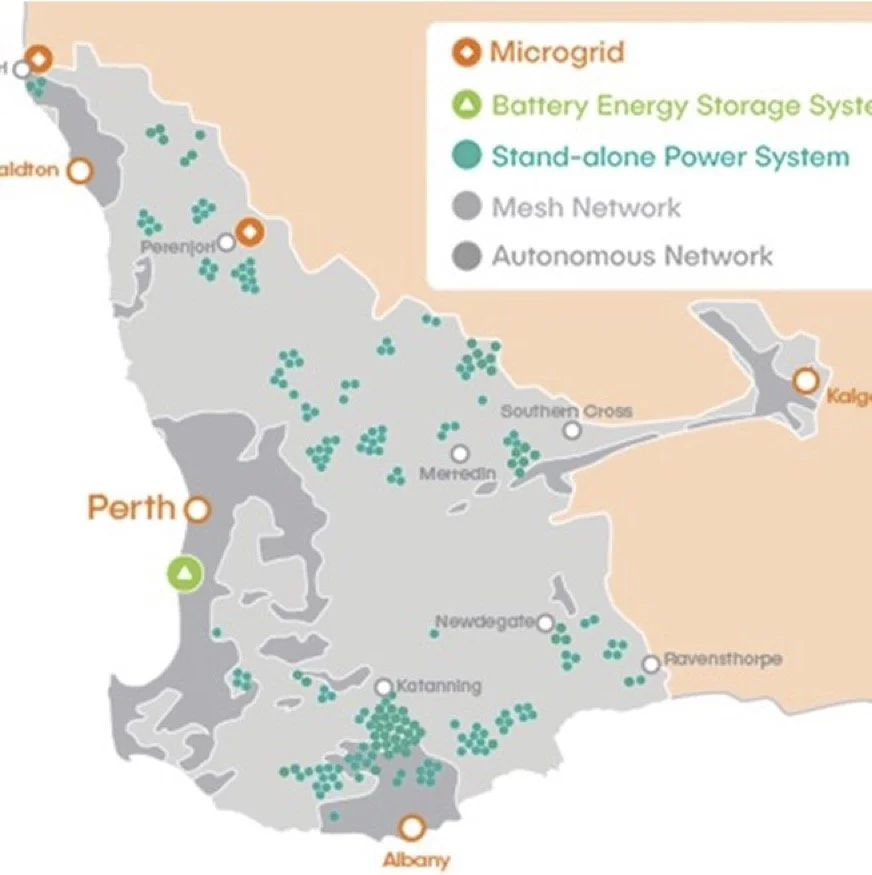
Western Power is at the cutting edge of distribution
In terms of regulatory economics theory, the core issue is whether distribution networks are still a monopoly service or whether they are contestable. In south-west Western Australia, Western Power has decided to convert more than 52% of its remote and regional network serving 3% of its customer base to stand-alone power systems (SAPS) and microgrids.